 Tamandua Biological Station
Book your stay
Research & conservation
Bring a project to Osa
Long-term monitoring, field observations and scientific collaboration help build knowledge of biodiversity at Tamandua.
Work at Tamandua
Planning your research visit
Short-term and long-term research is welcome. Researchers bring their own proposals, and Tamandua provides the forest as a living laboratory, simple facilities, Starlink satellite internet and solar-powered electricity.
Contact the station with your project details: objectives, methods, proposed dates, team size and practical requirements. Research must comply with SINAC and other applicable national requirements. Tamandua can offer guidance, but does not complete permits or applications for researchers.
For long-term projects, samples or marked study areas may remain at the station when agreed. Field courses and workshops from universities or NGOs are also welcome.
Since 2011
Camera-trap monitoring
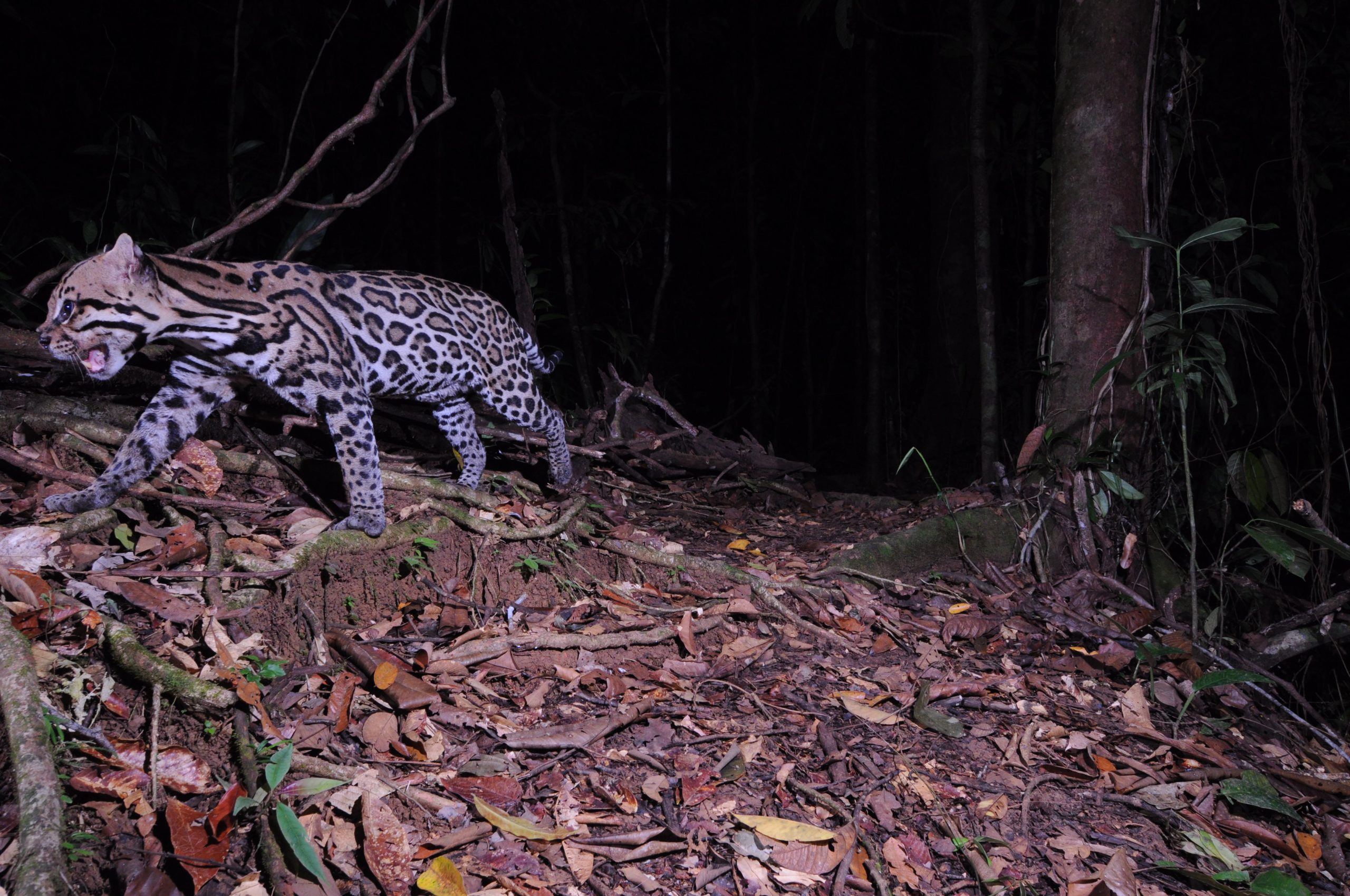
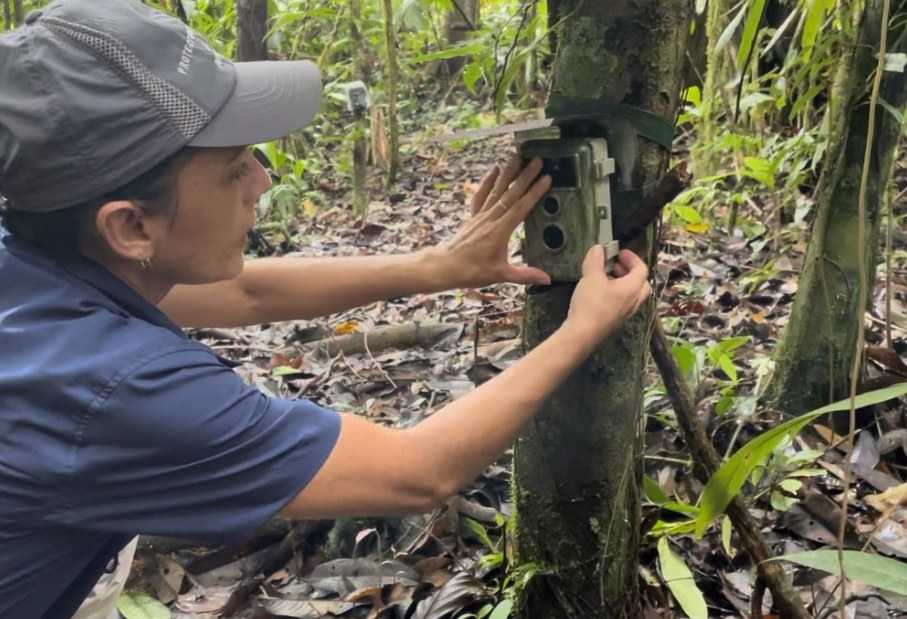
Camera-trap monitoring has continued at Tamandua since 2011. The records document all five species of wild cats found in Osa, as well as other endangered species. These observations build a record of animals that are often difficult to encounter directly in the forest.
Spotted felines can be identified individually by their coat patterns, helping us understand which individuals use the area. Over time, records can also help track the movements of species such as white-lipped peccaries and estimate the abundance of threatened mammals.
The value of this work grows with continuity. Long-term records allow comparisons through time, helping researchers understand population trends and ecosystem dynamics, and investigate how habitat loss, climate and human activity may affect wildlife. This knowledge can support conservation decisions and planning.
Collaboration with universities, NGOs and independent researchers strengthens the monitoring and its conservation value. Precise camera-trap locations are not published; sensitive spatial information is handled within the research and data workflow.
Since 2017
Butterfly monitoring
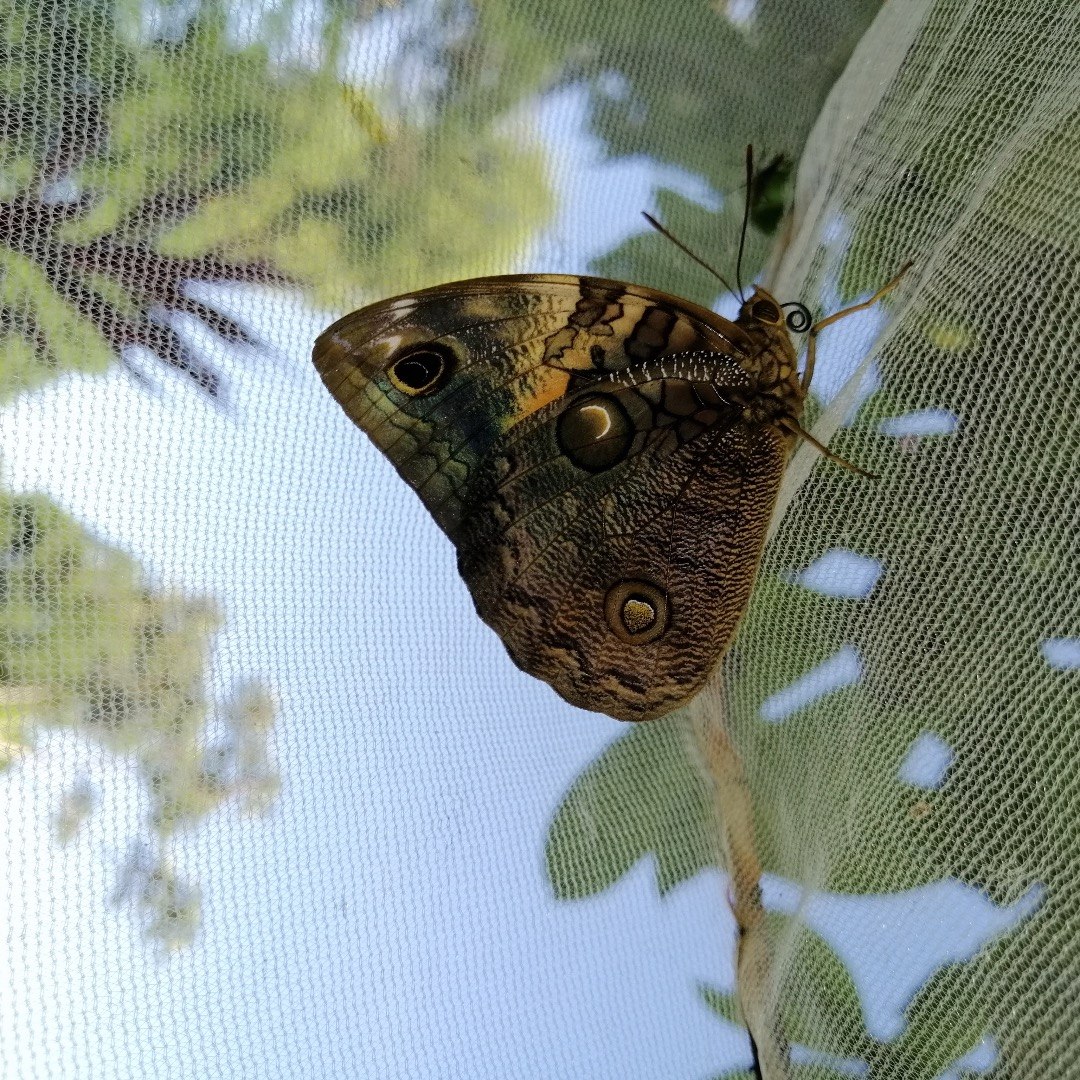
We began monitoring diurnal frugivorous butterflies in 2017. With the help of volunteers, sampling takes place for seven days each month, using traps baited with mashed bananas to attract the butterflies. They are photographed and released.
Repeated sampling allows us to compare diversity and abundance through the years and between dry and rainy seasons. Sampling currently takes place in the understory, the layer of vegetation beneath the forest canopy. In the future, if resources allow, we hope to sample the canopy as well and compare the two forest layers.
Butterflies are indicators of ecosystem health: understanding the diversity and abundance of different species helps us assess the conservation condition of the forest. Long-term monitoring is valuable because changes may provide early warning signals of shifts in biodiversity and ecosystem health.
Long-term monitoring
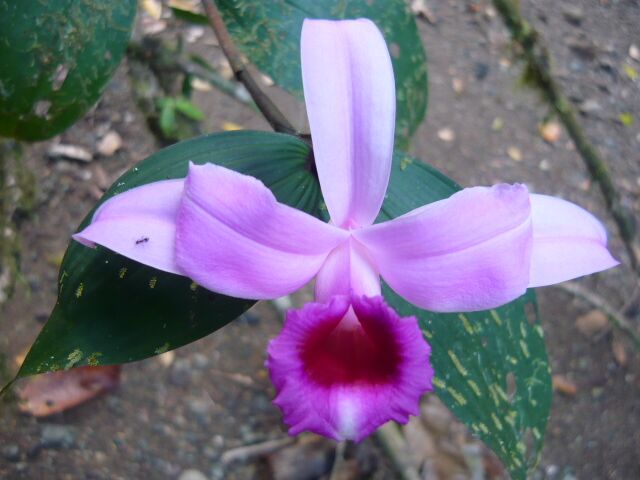
Monitoring and inventory of orchids
During the rainy season, branches and trees fall to the forest floor, often carrying orchids that would otherwise die if left on the ground. To preserve them, these orchids are rescued and relocated onto trees around the garden and along the trails.
We then wait for the orchids to flower so that they can be identified and added to the inventory of species present in the area. Flowering reveals essential features for identification, and repeated observation and photographs help build a more complete record over time.
This work contributes to conservation and research by improving knowledge of local orchid diversity, ecology and distribution. Continued monitoring helps us understand flowering and population patterns and supports the development of conservation strategies. Its value comes from maintaining observations over the long term.
Is electricity available for charging devices?
Solar-powered electricity is available at the station, with charging in the main communal area. Discuss any specific equipment or power requirements with Tamandua before arrival.
Is Starlink Wi-Fi available?
Yes. The station has Starlink satellite Wi-Fi. Researchers should describe any specific data or internet needs when discussing their project.
What kinds of research projects can Tamandua host?
The station welcomes short-term and long-term research, monitoring and thesis proposals. Projects need to be compatible with the forest setting, simple facilities and applicable national requirements. Contact Tamandua to discuss your objectives and support needs.
Do I need to bring my own research proposal?
Yes. Researchers bring their own proposals. Send the objectives, methods, dates, team size and practical requirements so the station can discuss what it can support.
Are short-term and long-term projects welcome?
Yes. Both are welcome, including thesis work. Discuss the project and arrangements with the station before planning your fieldwork.
What facilities are available for researchers?
Tamandua offers the forest as a living laboratory, simple facilities, accommodation, a communal hall and kitchen, Starlink satellite internet and solar-powered electricity. Describe any specific workspace, equipment or logistical requirements in your proposal.
Who obtains SINAC permits and other research authorisations?
Researchers are responsible for obtaining the permits and authorisations required for their work, including SINAC and other applicable national requirements. Tamandua can provide guidance but does not complete permit applications on behalf of researchers.
Can samples or marked study areas remain between visits?
For long-term projects, samples or marked study areas may remain at the station when this has been agreed with Tamandua.
Can universities or NGOs organise field courses and workshops?
Yes. Field courses and workshops from universities or NGOs are welcome. Contact the station with the group’s objectives, dates and practical requirements.
Can researchers collaborate with existing monitoring programmes?
Collaboration with universities, NGOs and independent researchers is welcome. Discuss your interests and skills with the station; participation depends on current fieldwork, methods and supervision.
Can I access camera-trap locations?
Precise camera-trap locations are not public. Discuss any spatial information needed for research directly with Tamandua so sensitive information can be handled appropriately within the agreed research and data workflow.
Ready to connect?
Discuss a field project
Tell us your dates, interests and practical needs. Tamandua will confirm the current options directly.
Contact Tamandua